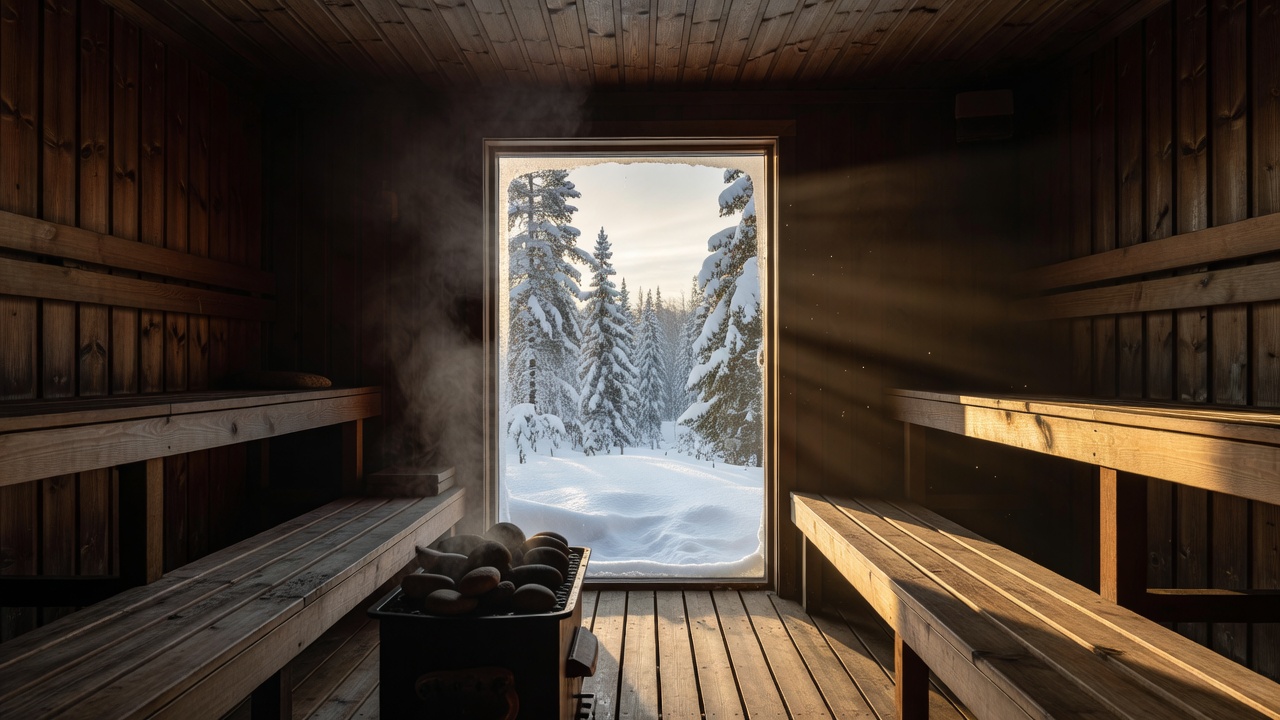
Sauna Culture
The heart of Finnish hospitality, traditions, and quiet relaxation.
The Ritual of the Löyly
In Finland, the sauna is not merely a room, but a cultural institution. It represents a space of purity, quietude, and equality. The core of the experience is the löyly—the steam created when water is cast upon hot stones. This gentle, enveloping heat is central to the feeling of relaxation that follows.
The process is unhurried. It involves heating the space, which in traditional wood-burning saunas is a meditative act of building and tending a fire. Bathing is typically done in cycles: warming up, generating löyly, and then stepping outside to cool down in the fresh air, a lake, or even the snow, before repeating the process.
A Social and Solitary Space
While often enjoyed in solitude as a retreat from the world, the sauna is also deeply social. It is a place where families gather and where friendsconverse honestly without the distractions of modern technology. Titles and hierarchies are left in the dressing room.
Types of Traditional Saunas
- Smoke Saunas (Savusauna): The original and most revered type. Heated for hours by a large wood fire without a chimney, the smoke fills the room. Before entering, the fire is let out and the smoke ventilated, leaving a soft heat and a distinct, sweet woody aroma.
- Wood-Burning Saunas: The standard for lakeside cabins. A metal stove (kiuas) containing stones is heated continuously with birch wood.
- Electric Saunas: Common in modern apartments and some contemporary cabins, offering convenience while still providing the essential löyly.
We present this information to help you understand the cultural significance of the sauna during your travels. Please note we do not make medical claims regarding sauna use; it is intended as a relaxing cultural experience.